

Paperweight Set "Walter Gropius"
Paperweight Set "Walter Gropius"
Prices incl. VAT plus shipping costs
Description
Four small objects. One remarkable story.
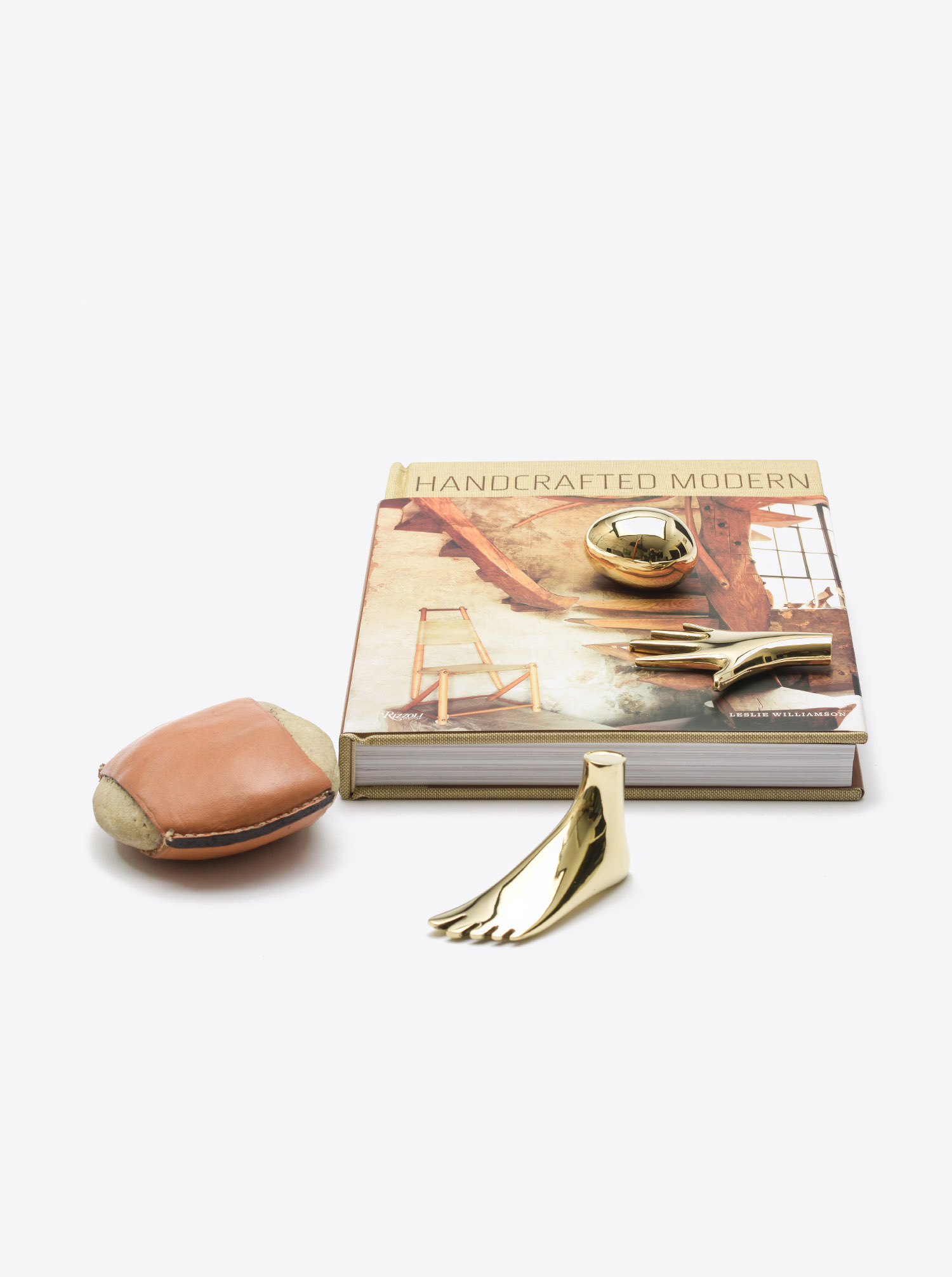
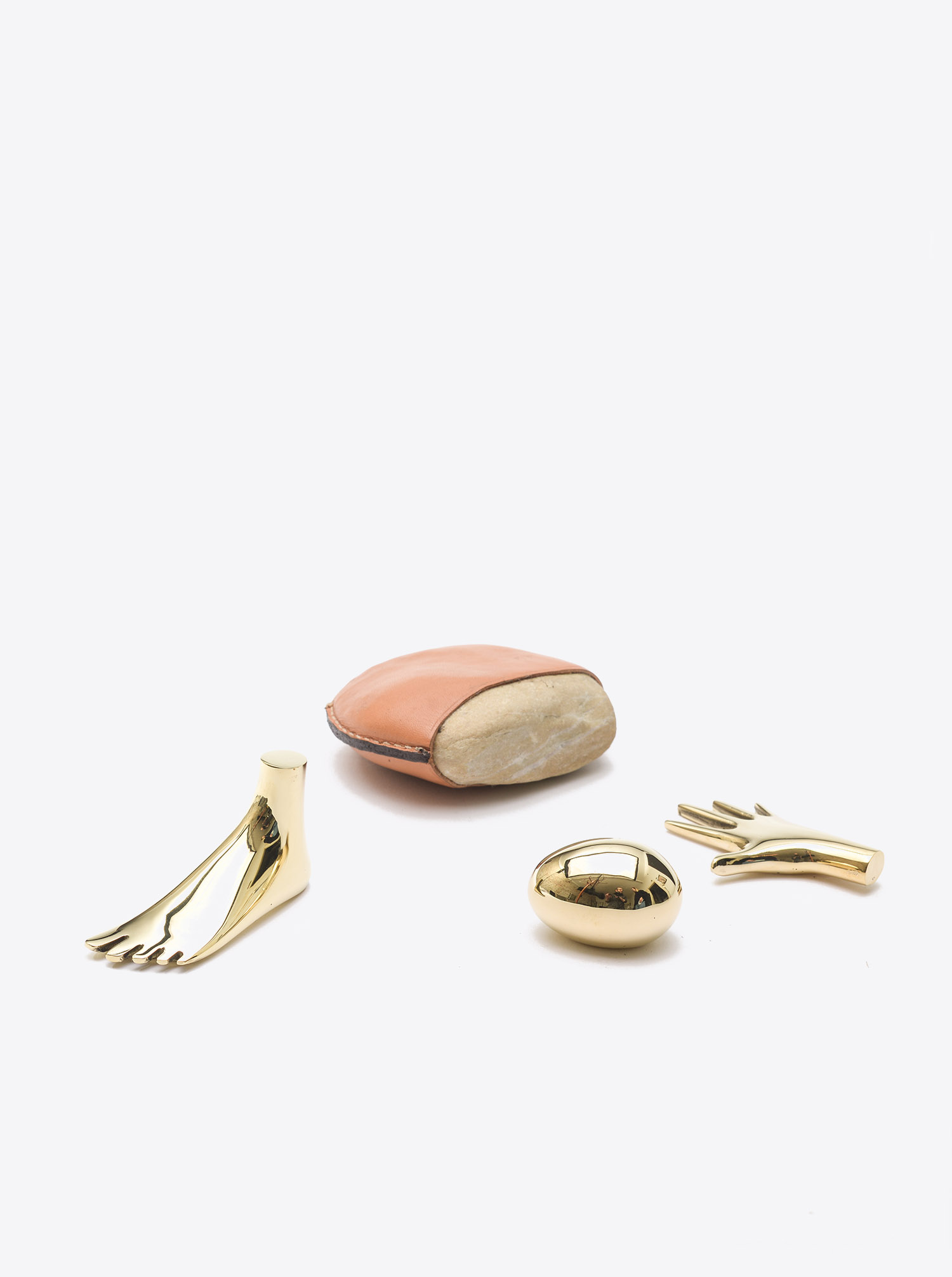
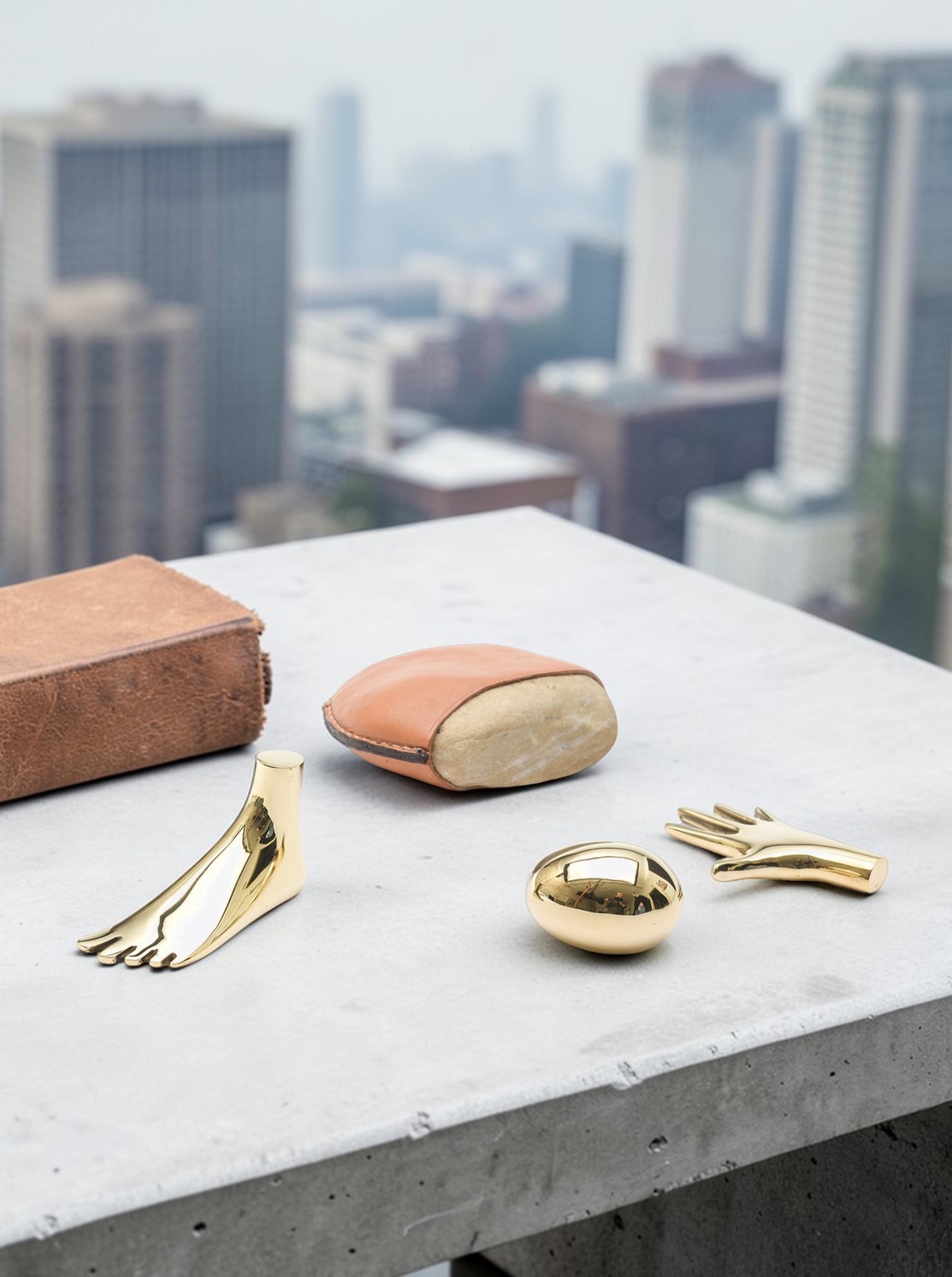
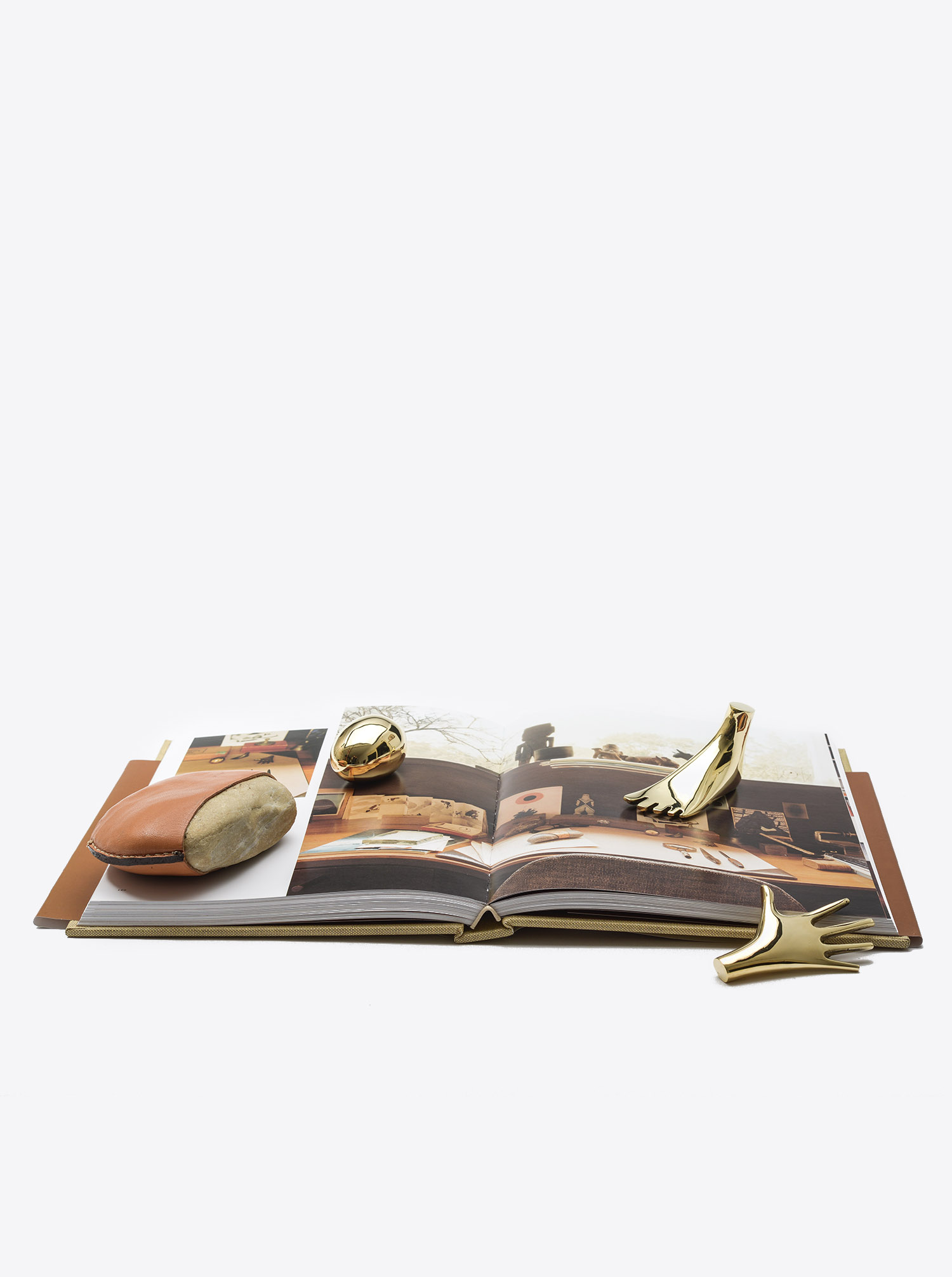
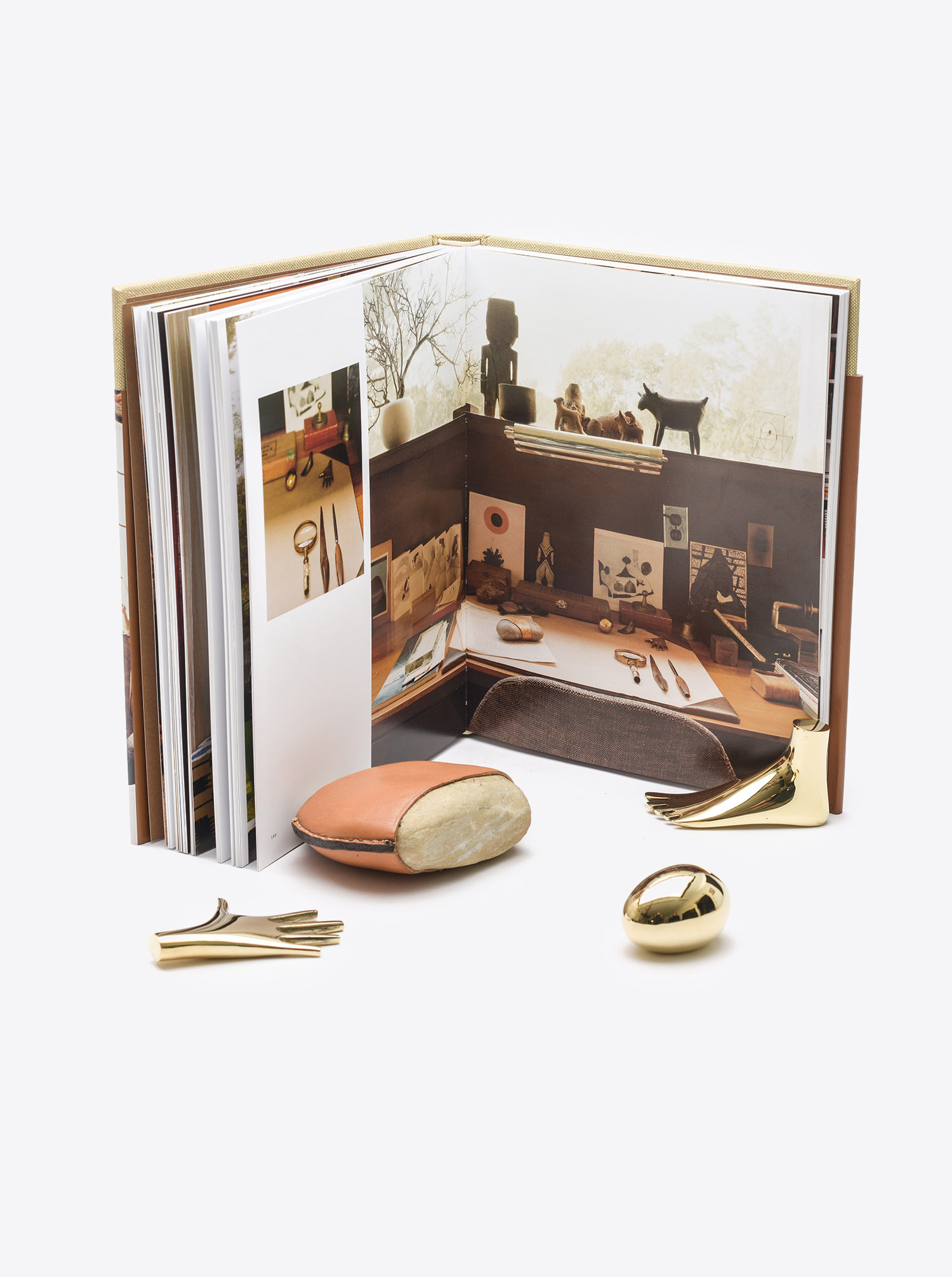
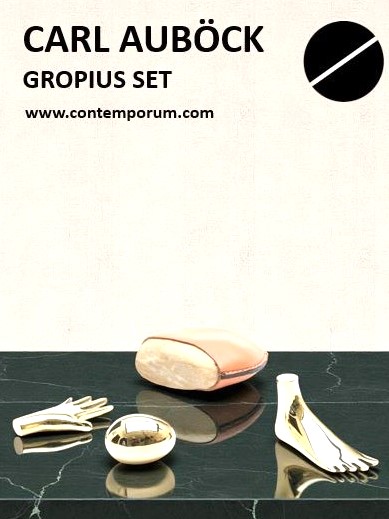
The “Walter Gropius” paperweight set is one of Carl Auböck II’s iconic designs from 1952–1954. It consists of four distinctive forms: the egg, foot, hand and stone. The leather-covered Danube pebble provides a natural contrast to the polished brass objects.
The set takes its name from its most famous owner: Walter Gropius, founder of the Bauhaus and one of the defining architects of modernism. Gropius used an Auböck set on his desk in the United States – in everyday life and exactly as Auböck intended his objects to be used: as functional things with a strong sculptural presence.
The combination of organic forms, polished brass and the natural character of the stone is exemplary of Auböck’s ability to transform everyday objects into small autonomous sculptures.
The stones are still collected and processed by Carl Auböck IV along the Danube near Kritzendorf. Each stone is therefore unique.
Designer: Carl Auböck II
Date: 1952–1954
Made in: Austria
Materials: polished brass, leather, Danube pebble
All objects are marked. Due to the use of the original moulds, minor irregularities may occur in the polished brass surfaces. These are part of the handcrafted character of the pieces. Each stone also varies slightly in shape, size and appearance.
Details
Year of origin 1952 - 1954
Info: Egg polished brass L5,5cm / feet polished brass L9cm / hand polished brass L8,6cm / Stone with leather L9-11cm. All products marked. Through the use of the original mold small errors, such as scratches or small creases can arise in the polished surface, which, however, do not detract from the charm of the object and underline the craft manufacturing process.
The stones are traditionally collected by Carl Auböck IV at the Strombad Kritzendorf (near outside of Vienna) at the Danube. As every stone is a unique piece, the sizes and styles can differ from the images shown.
